


The 2027 Shannon lecture will be given by:
- Andrea Goldsmith (Stony Brook University, USA)
The ISIT 2027 plenary speakers are:
- Jeffrey Andrews (University of Texas at Austin, USA)
- Devavrat Shah (MIT, USA)
- Paul Siegel (UCSD, USA)
- Stephanie Wehner (Delft University of Technology, The Netherlands)
Shannon Lecture
Andrea Goldsmith (Stony Brook University, USA)
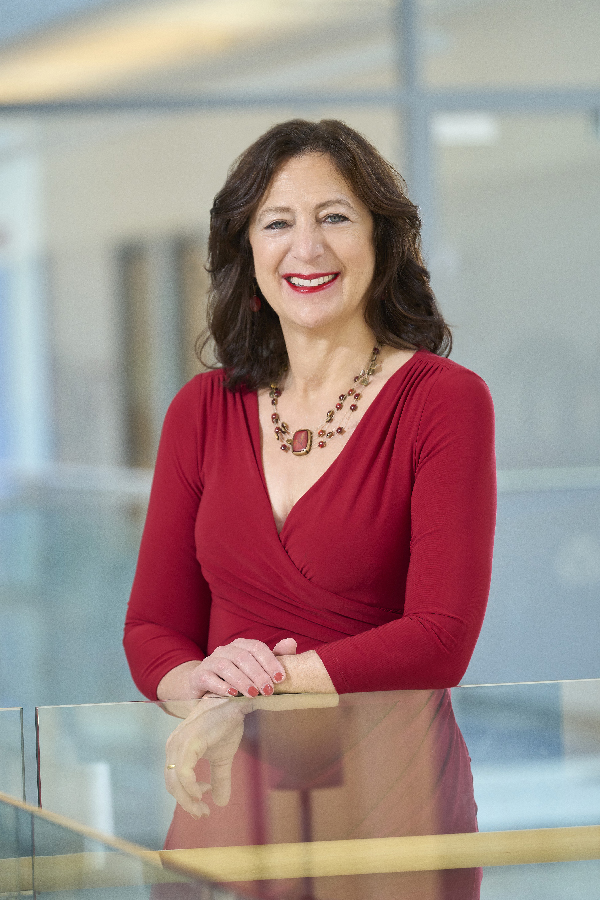
Date: Thursday (July 1)
Bio: Andrea Goldsmith is the 7th president of Stony Brook University where she also holds a faculty appointment in the department of Electrical and Computer Engineering. As president she also oversees Stony Brook Medicine, co-chairs Brookhaven Science Associates LLC, which manages Brookhaven National Laboratory for the U.S. Department of Energy, and chairs the board of the New York Climate Exchange. Dr. Goldsmith currently serves on the Board of Directors for Intel (INTC), Crown Castle Inc (CCI), the SUNY Research Foundation, and NYCREATES. She previously served on the boards of Medtronic (MDT) and the Marconi Society. Prior to her appointment at Stony Brook Goldsmith was Dean of Engineering and Applied Science and the Arthur LeGrand Doty Professor of Electrical and Computer Engineering at Princeton University. Prior to her tenure at Princeton, she was the Stephen Harris Professor of Engineering and Professor of Electrical Engineering at Stanford University, where she is now Harris Professor Emerita. Dr. Goldsmith founded and served as Chief Technical Officer of Plume WiFi and of Quantenna (QTNA), Inc. She also served on the Presidential Council of Advisors on Science and Technology (PCAST) from 2021 through 2025. Her research interests are in information theory, communication theory, control theory, and signal processing, and their application to wireless communications, interconnected systems, and biomedical devices.
Dr. Goldsmith is a member of the National Academy of Engineering, the Royal Academy of Engineering, the Royal Swedish Academy of Engineering Sciences, the American Academy of Arts and Sciences, and the National Academy of Inventors. She has been inducted into the Wireless Hall of Fame, the National Inventors Hall of Fame, and the Silicon Valley Engineering Council Hall of Fame. She has received several awards for her work, including the Marconi Prize, the IEEE Dresselhaus Medal, the IEEE Education Medal, the IEEE Information Theory Society Claude E. Shannon Award, the IEEE Communications Society Armstrong Technical Achievement Award, the ACM Sigmobile Outstanding Contribution Award, and the Silicon Valley/San Jose Business Journal’s Women of Influence Award. She is author of the book ``Wireless Communications'' and co-author of the books ``MIMO Wireless Communications,” “Principles of Cognitive Radio,” and “Machine Learning and Wireless Communications,” all published by Cambridge University Press, as well as an inventor on 40 patents. She received a B.S. in engineering math as well as M.S. and Ph.D. degrees in electrical engineering from U.C. Berkeley.
Plenary Talks
Jeff Andrews (University of Texas at Austin, USA)
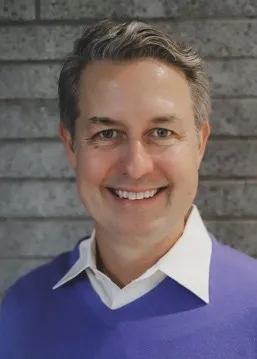
Bio: Jeffrey Andrews (University of Texas at Austin, USA) is the Truchard Family Endowed Chair in Engineering at the University of Texas at Austin where he is Director of the 6G@UT research center. He worked at Qualcomm (1995-97) on CDMA and Globalstar, and has served as a consultant to Samsung, Nokia, Qualcomm, Apple, Verizon, AT&T, Intel, Microsoft, and NASA. His former students include 12 faculty members, 5 IEEE Fellows, and several leading innovators on LTE and 5G on which they collectively hold over 2,000 US Patents. Dr. Andrews is an IEEE Fellow and ISI Highly Cited Researcher. He is the co-author of four books, and his papers have received 16 best paper awards, including the 2016 IEEE Communications Society & Information Theory Society Joint Paper Award, the 2014 IEEE Stephen O. Rice Prize, the 2014 and 2018 IEEE Leonard G. Abraham Prize, and the 2011 and 2016 IEEE Heinrich Hertz Prize. His other major awards include the 2015 Terman Award, the 2021 Gordon Lepley Memorial Teaching Award, the 2021 IEEE ComSoc Joe LoCicero Service Award, the 2019 IEEE ComSoc Wireless Communications Technical Committee Recognition Award, the 2025 IEEE ComSoc Communication Theory Technical Achievement Award, and the 2019 IEEE Kiyo Tomiyasu Award.
Devavrat Shah (MIT, USA)
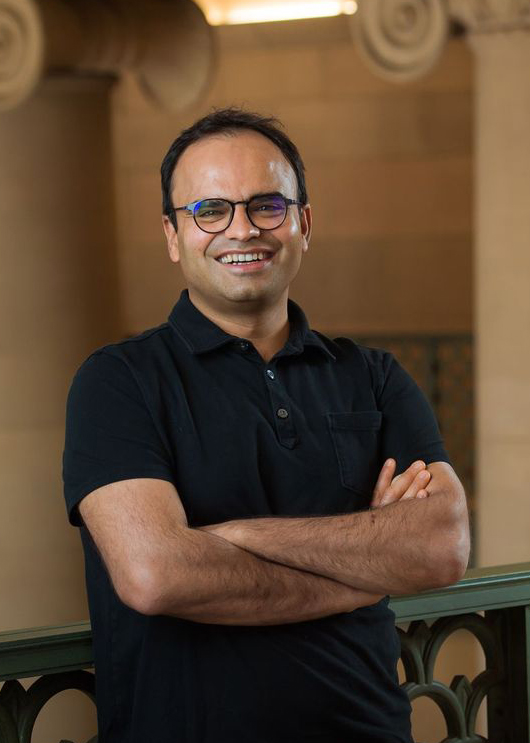
Bio: Devavrat Shah is the Andrew (1956) and Erna Viterbi Professor of Electrical Engineering and Computer Science at the Massachusetts Institute of Technology, where he has been on the faculty since 2005. He is a member of the Laboratory for Information and Decision Systems, the Institute for Data, Systems, and Society, and the Statistics and Data Science Center.He received his B.Tech. in computer science and engineering from IIT Bombay and his Ph.D. in computer science from Stanford University.Shah's research develops algorithms and theory for statistical inference, stochastic networks,network information theory, and social data processing. His work has contributed to resource allocation in communication networks, distributed algorithms, inference and learning on graphical models, ranking and recommendation systems, crowdsourcing, time series methods, and causal inference from observational and experimental data. A recurring theme in his research is the design of practical algorithms with rigorous performance guarantees for large networked and data-rich systems.He has served as editor-in-chief of Stochastic Systems, as an associate editor for IEEE Transactions on Information Theory, IEEE Transactions on Network Science and Engineering,Operations Research, and Queueing Systems, and as lead guest editor for IEEE Journal on Selected Areas in Information Theory on estimation and inference.Shah is an IEEE Fellow and a Kavli Fellow of the U.S. National Academy of Sciences. His recognition includes the 2025 ACM SIGMETRICS Achievement Award, the 2024 INFORMS Applied Probability Society Markov Lecture, the 2010 Erlang Prize from the INFORMS Applied Probability Society, and the 2008 ACM SIGMETRICS Rising Star Award. He has received bestpaper, best publication, and test-of-time awards from venues and societies including IEEE INFOCOM, ACM SIGMETRICS, NeurIPS, the INFORMS Applied Probability Society, INFORMS Revenue Management and Pricing, and INFORMS Manufacturing and Service Operations Management. He is a distinguished alumnus of IIT Bombay. Beyond his academic work, Shah co-founded Celect, an AI company for retail demand forecasting and inventory optimization that became part of Nike, and Ikigai Labs,that developed AI systems for enterprise forecasting and planning that became part of Celonis
Paul Siegel (UCSD, USA)
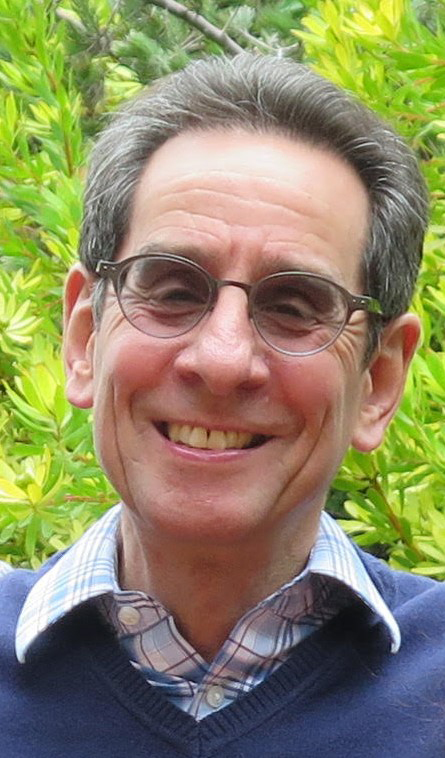
Bio: Paul H. Siegel is a Distinguished Professor of Electrical and Computer Engineering in the Jacobs School of Engineering at the University of California, San Diego. His research interests are in the areas of information theory and coding, with applications in data storage and communications. He received the S.B. and Ph.D. degrees in mathematics from MIT in 1975 and 1979, respectively, and held a Chaim Weizmann Postdoctoral Fellowship at the Courant Institute, New York University. He was with the IBM Research Division in San Jose, California from 1980 until he joined the faculty at UCSD in 1995. He holds an endowed chair at the Center for Memory and Recording Research where he served as director from 2000 to 2011. He was co-recipient of the 1992 IEEE Information Theory Society Paper Award and the 1993 IEEE Communications Society Leonard G. Abraham Prize Paper Award. He was the 2015 Padovani Lecturer of the IEEE Information Theory Society. He served as Associate Editor and Editor-in-Chief of the IEEE Transactions on Information Theory, and as guest editor of special issues on aspects of coding theory and data storage in two IEEE Transactions, two IEEE Journals, and IEEE BITS Magazine. Prof. Siegel is a member of Phi Beta Kappa and a Fellow of the IEEE. He was elected to the National Academy of Engineering in 2008.
Stephanie Wehner (Delft University of Technology, The Netherlands)
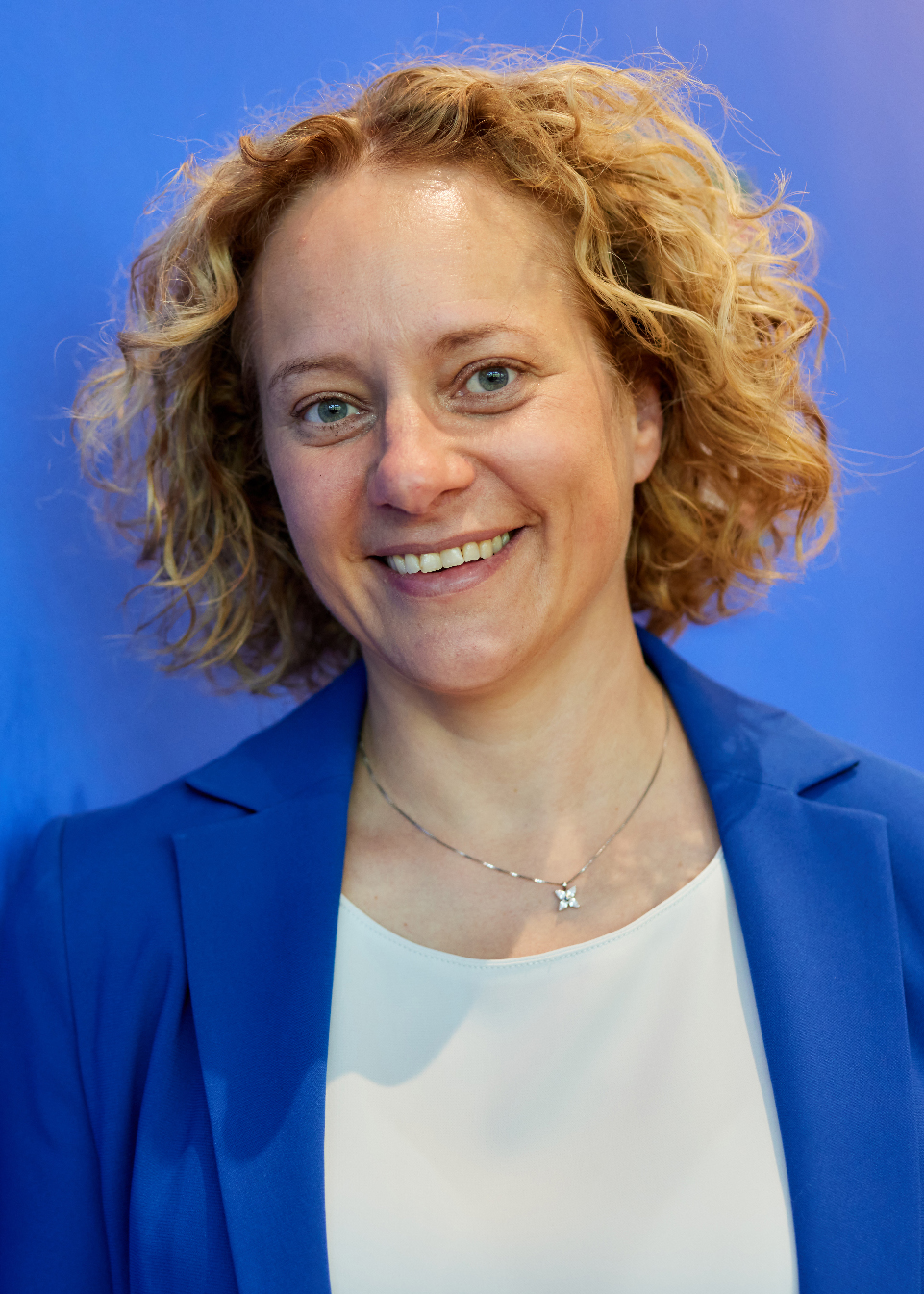
Bio: Stephanie is a member of the Royal Dutch Academy of Arts and Sciences, has won the Koerber European Science Prize and KNAW Ammodo award, and is one the founders of QCRYPT, which has become the largest conference in quantum cryptography. She has written numerous scientific articles in both physics and computer science. From 2010 to 2014, her research group was located at the Centre for Quantum Technologies, National University of Singapore, where she was first Assistant and later Associate Professor. Previously, she was a postdoctoral scholar at the California Institute of Technology in the group of John Preskill. In a former life, she worked as a professional hacker in the industry.